The Official SAT Question of the Day

Tuesday, December 10, 2013

Polynomials - Putting a String to all the Pearls


There are so many pieces when it comes to polynomials that it is often hard to fit them all together and get the big picture of what they are and how they behave.

To help you gain some leverage on this I have two different sets of resources:


1)  A set of reference sheets that serve as verbal and graphical summaries of the key concepts around polynomials


2) A great set of videos from LearnZillion that carefully walk through some of the big ideas around polynomials.


Here are the upcoming and current homework:

Thursday, October 24, 2013

Quadratics - The Basics


We have started investigating quadratics and will soon be adding a new number system to the mix to help us capture concepts that quadratics give rise to that linear and exponential models do not.  Stay tuned on that.  As for the basics of quadratics here are the concept development lessons around their graphs and behavior as well as the PowerPoint that marches us toward unknown territory.

Practice on the basics can be found on Khan Academy and TenMarks.  Here is the link to Khan Academy and we will be onboarding TenMarks in the coming weeks.

Conceptual Development Lessons:


Quadratic Functions Powerpoint:


Fun Factoring Video!

Tuesday, October 15, 2013

Algebraic Manipulation ... Factoring!


We are entering a brief session on factoring that we will return to time and time again as we continually use algebra to rewrite expressions to serve the particular needs of the moment.  Here are a couple short videos on factoring quadratic expressions and equations to help you engage the work when you are learning on your own.  These videos focus on the procedural side of factoring and are more about the mechanics of factoring.  We will think conceptually about this in class!

To help you think strategically at factoring we referenced this flowchart in class 


After watching the videos below you may want to practice here is an applet with endless practice with answers!

Factoring quadratic expressions in standard form with a=1.


Factoring quadratic expressions in standard form witha not equal to 1.


If you would like to practice AND know

Tuesday, October 1, 2013

Brief Recall of Functions


Over the last few weeks we have been using function notation to write rules for sequences, but the results are in ... We need to spend a few focused days recalling the meaning and notation surrounding functions.

Find two interactive applets to explore or deepen your understanding of functions embedded below. They are super cool and fun, I promise.

https://www.khanacademy.org/math/algebra/algebra-functions


Visualizing Functions as Graphs

Relating inputs and outputs graphically:


Here is the short presentation that we will engage together as we review of the topic:

Tuesday, September 17, 2013

Arithmetic and Geometric Sequences


After working with patterns and attempting to organize what we see and act on it, we are formalizing our experience through a couple of weeks of analyzing arithmetic and geometric sequences both in their explicit and recursive form.  This formalization has a great deal of notation to adjust to, but is ultimately just a shorthand way of writing how the pattern works.  Can you write an explicit and recursive equations for the sequences above?

All of our homework for the next three weeks will be from It's All Connected and while I cannot upload the file here, if you are a student I can email you the file if you lose your it!

I have embedded three videos to help those of you who want to review some of the big concepts at home:

1.  Here is a video from Khan Academy on explicit and recursive definitions

Explicit and recursive definitions of sequences:

2.  Writing Recursive Formulas from Arithmetic Sequences


3.  Writing Recursive Formulas form Geometric Sequences


Online Practice and Videos from Khan Academy available here: https://www.khanacademy.org/math/trigonometry/seq_induction/seq_and_series/v/explicit-and-recursive-definitions-of-sequences

Tuesday, September 3, 2013

Trying Simpler Cases and Understanding Relationships


Adapted from Burkhardt's The Real World and Mathematics.
Last week we were working with contexts that emphasized numerical relationships in order to develop strategies to solve non-routine problems. This week we are beginning to focus more on relationships between quantities and how graphs, verbal descriptions, pictures, and tables convey meaning about a situation or context.  As the image above shows the representation of these relationships and the ability to translate from one to another is crucial in our development of problem-solving skills. Here are the goals for translation fluency that we will cover over the coming two weeks: 
1. Interpreting mathematical representations using words or pictures.
2. Translating words or pictures into mathematical representations.
3. Translating between mathematical representations.
4. Describing functional relationships using words or pictures.
5. Combining information presented in various ways, and drawing inferences where appropriate.
6. Using mathematical representations to solve problems arising from realistic situations.
7. Describing or explaining the methods used and the results obtained.
(from The Language of Functions and Graphs)
The problem sets we will be investigating are below.  They focus on interpreting points within a context (A1) and sketching graphs from words (A3). As we work through these problem sets I hope that we develop a fluency in using the mathematical language of graphs, tables and algebra to describe and analyse situations from the real world.  We will do this by engaging in thoughtful discussion as a whole class, between partners, and in groups in order to comprehend as well as communicate information presented in a mathematical form.

A1 Interpreting Points
A3 Sketching Graphs from Words

While we investigate and solve problems in class, our opening problems and homework will be reviewing the work on systems of equations you did in Algebra 1.  The homework for this week is at the link below:

Pet Sitters, Part 1

Here is to a great week!

Tuesday, August 27, 2013

Persevering in Problem Solving

http://www.flickr.com/photos/sedeer/2611782632/
Over the next three weeks we are going to grow in our problem-solving skills and slowly gain a toolkit of strategies and entry points for the problems that we will solve over the course of the year.  [If you still need to complete the student information form, sign-up for Khan Academy, or register at Remind 101 go to the previous post for that information].  The strategies I would like for you to keep in mind are the following:
  • Try some simple cases
  • Find/Create a helpful diagram
  • Organize systematically
  • Make a table
  • Spot patterns
  • Use the patterns
  • Find a general rule or equation
  • Explain why it works
  • Check regularly
Please find the homework that is due next Tuesday at the link below:
Pond Borders, Sorts, and Diagonals

Remember that as you are completing these that you are thinking about our aims around communication and reasoning:

Communication Strategies and Reasoning
1. I understood what you did and why you did it.
2. Your solution was well organized and easy to
follow.
3. Your solution flowed logically from one step to
the next.
4. You used an effective format for communicating.
5. Your mathematical representations helped clarify
your solution.
6. You used mathematical terminology correctly.
1. You chose appropriate, efficient strategies for solving the problem.
2. You justified each step of your work.
3. Your representation(s) fit the task.
4. The logic of your solution was apparent.
5. Your process would lead to a complete, correct solution of the problem.
6. The evidence you showed clearly supported your solution.

Thursday, August 22, 2013

Back to School 2013-2014


Greetings Scholars.  Happy you have landed here to check-in and see what resources, notes, and info I may have for you (also to fill in the student information form, etc. all listed below).  These first few weeks we will be spending the majority of our time developing a deep understanding of what habits can allow any of us to be great thinkers and, specifically, mathematicians.  We will, together, reflect on what is working and why.  I hope to huddle our thoughts around these, but look forward to adding more as we solve problems together:


  • Try some simple cases
  • Find/Create a helpful diagram
  • Organize systematically
  • Make a table
  • Spot patterns
  • Use the patterns
  • Find a general rule or equation
  • Explain why it works
  • Check regularly


I look forward to learning about and solving problems together these first few weeks. Below are a few things I have asked you to do to get started with A2 this year: (1) Complete Student Information Form (2) Sign-up for Khan Academy and add me as your coach (ID:darren.burris@gmail.com, my coaches code is 3ZK6YK) (3) Login in to TenMarks with your ID and (4) sign-up for Remind 101.  I know, it sounds like a great deal, but all of it will help us toward our ultimate goal of learning math together this year.

(1) Student Information Form:


(2) Khan Academy ... add me as your coach! (ID:darren.burris@gmail.com, my coaches code is 3ZK6YK)
Video to help you with adding me as your coach!


(3) TenMarks (registration will occur after September 1)

(4) Remind101 Registration.  Click here for directions!

Thank you for checking-in and registering for some of the tools we will be using this year as we learn and explore math together!

Wednesday, June 19, 2013

Common Core Algebra 2 2013-2014 Planning, Take 1

Algebra 2 has become a huge course that expands the set of functions considerably from Algebra 1, increases the algebraic demands of structuring and restructuring expressions, as well as introduces a significant amount of high-level statistics. This has done the great service of pushing the Algebra 2 course to actually be Algebra 2 rather than Algebra 1.5, but has also raised a large challenge on creating a classroom where procedural fluency, conceptual development, and application are balanced and each rigorous in their own right. This post will continue to develop over the summer, but I hope to share what I'm thinking the shape of the course will be. So, if your reading this please come back often and leave comments to help the course be a good one!

Phase 1: Framing the course around the mathematical practices + IBL principles through a visual ... See below:


online flow chart
Phase 2: Getting a 30,000 feet scope and sequence of the year together.  For this part of the work I took some initial inspiration from the work at A2i and Dan Goldner, and for more concrete ordering of possible events from the Dana Center.  Here is what I came up with and am still negotiating (tab two I will eventually populate with tasks that will anchor each unit):


Phase 3: Selecting meaningful tasks that engage, rely on critical thinking skills, develop problem-solving habits, and reinforce the necessity and important of procedural fluency.  I have identified some of the resources I will pull problems from this link, "Problem-Based Learning and the Common Core." I am planning to open with an emphasis on organization, sketching, and diagramming skills that will rely on the amazing and wonderful work in Problems with Patterns and Numbers. As I said, this blogpost will have iterations of the how, what, and why.

Phase 4:  Identify the set of instructional practices I am going to deploy and develop to allow the classroom to be a rigorous, joyful, student-centered learning environment.  I am still working on my solid list, but here are some that I am thinking I will rely on and make routine.

  • Think-Pair-Share
  • Student Presentations of Problems (a la Goldner)
  • Problem-solving lessons (a la MAP)
  • Gallery Walks
  • Sorts
  • Stations with an emphasis on play and discovery utilizing Desmos
  • Individual practice utilizing TenMarks to support student learning and offer meaningful personalization in and out of school.
  • Claim-Evidence-Reasoning done collaboratively in groups and as a class using Google Docs
  • Student created days emphasizing self-regulation with use of regulatory cards
Phase 5: Reflect, adjust, and structure the course in a more balanced way around conceptual, procedural and fluency skills, and application.  This is part of the work of the summer!

More to come, here is take one!

Monday, February 4, 2013

Be Rational!


Click on the graphs above to interact with and see the relationship between algebraic definitions of functions and their graphical representations.  As we progress through this unit your algebraic, numerical, and graphical understanding of this function should be deepened and allow you to apply your understanding of the behavior to rational functions in a modeling context.  This unit will focus on simple rational functions with a special emphasis on modeling rates, average cost, and geometric ratios.

The homework of this unit will continue to push and develop your ability to interpret functions in their graphical context.  The homework can be accessed from this link: visualizing relationships.

TenMarks does have a series of problem sets on rational functions so please take advantage of the.practice and review available there.

Here is a link to one set of videos on rational functions to give you a brief exposure to the content and a walk-through of a few problems.

The PowerPoint presentations that supports the work of this unit is embedded below:


General Overview Graphing Rational Functions (in depth) Classic Word Problems

Wednesday, November 21, 2012

Polynomials

Higher Order Polynomial
https://www.desmos.com/calculator/1jrm9svty1
Polynomials from Constants to x^5
https://www.desmos.com/calculator/ve1lwttlmo


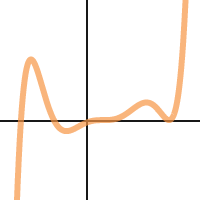
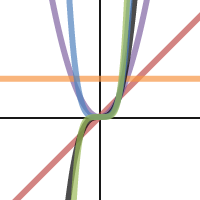
The broad family of functions called polynomials allows us to investigate the behavior of functions in depth and hone all previous skill sets we have started to develop.  The graphs above represent polynomials of differing degrees: linear, quadratic, cubic, quartic, quintic, sixth degree, etc.  This unit will serve as a culmination and an extension of what you have already done with linear and quadratic functions.

(Pre)Review Materials:
Here are some of the skills you should have mastered that are available to you on Khan Academy.  Please let me know if you are going to start using this as a way to remediate, review, practice, or push ahead!
Khan Academy Practice workflow sheets:
Creating and Solving Linear Equations
Linear Functions
Systems of Equations and Inequalities
Quadratic functions
Functions

TenMarks Passwords
Period 2 Login Information
Period 5 Login Information

PowerPoint and Guided Notes:
This unit on polynomials will largely develop through two key documents that are both embedded below.  The first is a PowerPoint presentation that provides much of the meat of polynomials and provides you a resource to review and reference as we cover this topic together.

 The second is a set of guided class notes that will walk through some of the skills we will need to work through together.  We will fill this out together as we move through this unit.
Polynomial Videos:
Here is the link to the list all of the Khan Academy videos on Polynomials.  
Below are two more videos that may be helpful to preview or use as review some of the big ideas.


Homework (stay tuned, more to come):


Reference Sheets:

Thursday, October 25, 2012

Function Notation and Intrerpretation


After reviewing the basics of linear equations, linear systems of equations and inequalities, and quadratic equations, we are going to step by back and look at the larger idea of function.  Here is Salman Khan's (of Khan Academy) introduction to functions video (you can continue to watch his series on functions by clicking here):
Introduction to functions: An introduction to functions.


Here is the basic presentation of the technical side of functions and function notation that we will be navigating over the next 8-10 days:
Here are the series of conceptual tasks we will be going through over the next week that build the general idea of a function from understanding points to understanding the relationship between two values. Please click on the link below to see or print the class tasks we will be investigating (scaffolded document from Language of Functions and Graphs):
Tasks 1 - 4:  Interpreting Points and Sketching Graphs from Words
Tasks 1 - 4:  Interpreting Functions in Situations

Please find the homework embedded in the folder below:
Homework due Friday November 2nd are the files "Space Station," "Painted Cubes," and "Distance and Time"
Homework due Friday November 9th are the files "Community Park," "Bathing the Dog," "Walking the Yo-Yo," "Extracurricular Activities, and "Nesting Rectangles."
Homework Due Friday November 16th are Tasks 2 and 3 of Interpreting Functions in Situations.
Homework Due Friday November 30th are Functions and Function Notation and Quadratic Tasks (from the Dana Center Assessments)

Basics of Functions Powerpoint:


Those pursuing Khan Academy Practice may reference these workflow sheets based on topics of interest to help you "know" which ones to do!
Creating and Solving Linear Equations
Linear Functions
Systems of Equations and Inequalities
Quadratic functions
Functions


Thursday, September 13, 2012

Quadratics!

See at  https://www.desmos.com/calculator/tzgpvgn8p2 
Our next unit will be a brief exploration of quadratics with an emphasis on three things (click each for a short video on the topic):
1. Completing the Square
2. Complex Numbers
3. Applying quadratics to solve geometric problems

Prior Knowledge Alert:
We should be building on the work you have already done in Algebra 1 on quadratics and we will largely assume the following three things (click each for a short video on the topic):
1.  Factoring
2.  Quadratic Formula
3.  Graphing Quadratic Functions

Please find a couple videos that introduce the big concepts from this short unit on quadratics below as well as the presentations, reference sheets, problem sets, and homeworks for the coming weeks.

Here is our collective brainstorm on Linear and Quadratic Functions as well as some factor by grouping and sum and difference of cube examples from class.

Linear-Quadratic Brainstorm Summary
Grouping and Sum and Difference of Cubes Class Examples
Completing the Square Class Examples
Solving Quadratic Equations Class Examples (practice problems with answers)

Homework Due October 19th

Complex Roots from the Quadratic Formula:


Linear, Quadratic, and Exponential Models: Linear, Quadratic, and Exponential Models


Wednesday, August 29, 2012

Systems of Linear Equations and Inequalities

The first week and a half we reviewed linear functions as tools to model the relationship between two quantities with an emphasis on distance vs. time relationships.  This week we are moving into a brief review systems of linear equations, which will culminate in exploration of linear programming.  The picture at left is an example of what we will eventually will be building, interpreting, and using to solve real-world problems.

Please find a video on systems of equations in three variables below as well as one on systems of inequalities immediately below.  I encourage you to take a moment and critically view them, pausing and re-watching when needed.The documents for our first unit are embedded beneath that, including the next two homework assignments.  

Systems of Three Variables:

Graphical Systems Application Problem:


Linear Programming Example:

Documents from our first unit:

Monday, August 20, 2012

Modeling Linear Functions

The emphasis of Algebra 2 this year will be mathematics and modeling.  Here is a general diagram that overviews the modeling cycle:
Here are some examples of modeling to get you thinking about mathematical models:
  • Estimating how much water and food is needed for emergency relief in a devastated city of 3 million people, and how it might be distributed.
  • Planning a table tennis tournament for 7 players at a club with 4 tables, where each player plays against each other player.
  • Designing the layout of the stalls in a school fair so as to raise as much money as possible.
  • Analyzing stopping distance for a car.
  • Modeling savings account balance, bacterial colony growth, or investment growth.
  • Engaging in critical path analysis, e.g., applied to turnaround of an aircraft at an airport.
  • Analyzing risk in situations such as extreme sports, pandemics, and terrorism.
  • Relating population statistics to individual predictions.

The first week and a half will be reviewing linear functions as tools to model the relationship between two quantities with an emphasis on distance vs. time relationships.  Please find the syllabus, course overview, and self assessment embedded below.


Documents from our first unit are embedded below:


Please do not forget to complete the following things listed in the syllabus by Friday of this week:

Required Online Registration for the following:


Monday, July 9, 2012

Summer Packets 2012

Greetings Scholars!
You have likely been out of school a few weeks and are starting to feel a bit rusty with some of your basic math skills . . . Well, you are in luck, because your summer packets are here for your to keep your mathematical skills primed and ready for a successful fall.
Note: They are two files for AP Statistics students and Algebra 2 for 9th Grade and for 11th Grade have the same file!

Friday, June 8, 2012

From Functions to Finals!

Algebra 2 is wrapping up a review of functions and heading into finals.  Please find our functions review embedded below and the associated homework as well as tools to start studying for finals!  Please remember to check out the fact sheets, problem sets, and Prezi's made by the seniors for you here:  A2toPrecalc.


Finals Resources!


Review Popplet:


Khan AcademyKhan Academy Practice
Online Practice ExamsSelf-Mastery Tests
Final Topic List and Review Packets:

Thursday, May 17, 2012

Finals, finalizing Rationals, and looking toward Circles


Thinking about finals may be overwhelming, but hopefully these two review packets with answers will help you negotiate the basic skills required to succeed on the final.


 In addition, please find some online exams on a variety of topics to help you prepare for the final. Click to the appropriate topic and get some practice--also, don't forget about your TenMarks account!

Web-based Practice Tests

Monday, April 2, 2012

Starting Trigonometry and Rational Functions


Photobucket

Photobucket


Precalculus is starting the descent into the intricate, beautiful, and wonderful world of trigonometry.  We will spend the remaining time this year exploring triangles and how they become a window into the periodic behavior of tides, light, and even crankshafts!  The two applets above capture the conceptual essence of what we are building together over the next week--reflect on them and start to SEE the trigonometry.


The homework is due Monday the 9th of April and should generally be a review of trigonometric ratios with a couple twists.


Algebra II
begins the brief introduction to rational functions and will focus on the interconnections between the graphical, algebraic, and tabular representations of this function. Please find some of the powerpoints on these topics below:

The homework is centered on graphing of rational functions and requires more time than it looks! Be diligent.

Thursday, March 15, 2012

End of Polynomials and Logarithms

 www.math.montana.edu

Both Algebra II and Precalculus are wrapping up lengthy units in polynomials and logarithms respectively. Precalculus will move onto trigonometric functions and Algebra II will move onto a small unit on rational functions.  As the functions come and go, it appears that students are understanding the basic but sometimes conceptually complicated life of functions.

Algebra II will complete one more week focused on "modeling."  I am hoping to be explicit and use the rich and full framework developed in the common core state standards:

http://www.meaningfulmath.org 

The homework is from your textbook:  pp. 375-377 #1-53 and pp. 380-382 #1-45.  If you are still feeling a bit lost when it comes to polynomials you can check your textbook and the accompanying video series.  Algebra 2 Videos linked to your textbook (we are in chapter 7!).


Here is a refresher video on how to enter data, plot data, and calculate a regression:


Precalculus will complete logarithms next week by engaging a series of applied problem scenarios.  The homework is a combination of review and application--see below.